Computer science education is an important part of modern learning because technology is used in almost every area of life. From smartphones and websites to online banking and artificial intelligence, computers help people complete tasks more efficiently. Learning computer science helps students understand how these technologies work and how they can create new digital solutions.
Today, computer science education is useful for students, professionals, and beginners who want to develop technical skills. You do not always need previous programming experience to get started.
Why Is Computer Science Education Important?
Computer science education helps students understand the technology they use every day. Computer science education fosters logical thinking, creativity, and problem-solving skills; at the same time, it also contributes to our broader education..
Many industries, including healthcare, banking, education, and business, depend on computer systems. Studying computer science can provide students with opportunities across various fields and industries. lifelong learning because technology continues to change and develop.
What Do Students Learn in Computer Science Education?
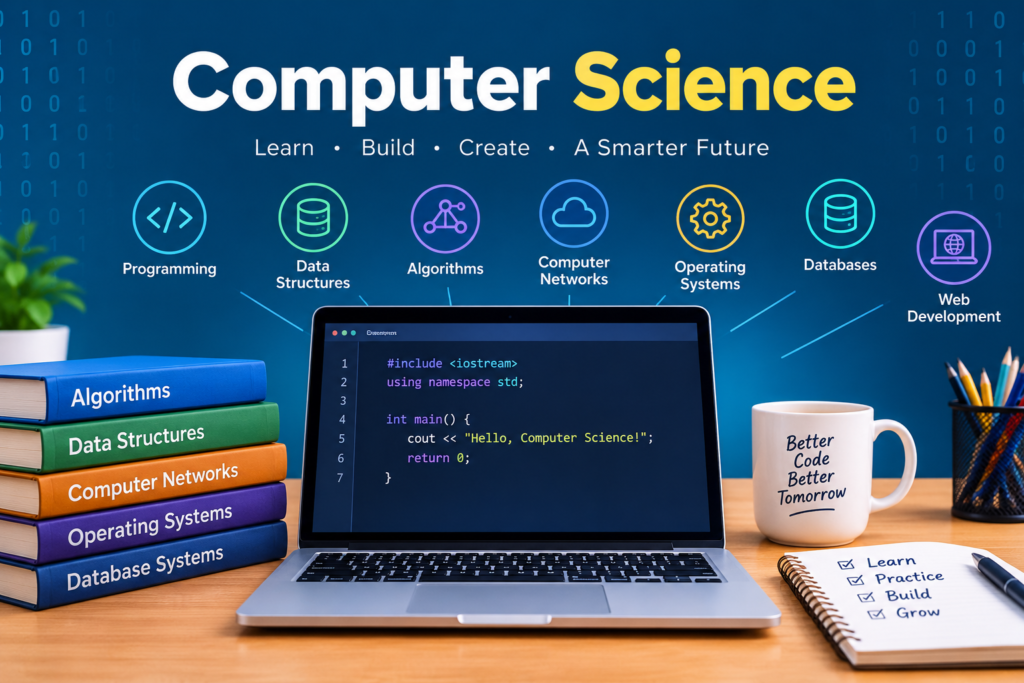
Students study several important topics during their computer science education.
Computer fundamentals
Learn about hardware, software, operating systems, and basic computer functions.
Programming and coding:
Understand how to write instructions using languages such as Python, Java, or C++.
Algorithms:
Learn step-by-step methods for solving problems efficiently.
Databases
Discover how information is stored, organised, and retrieved
Computer networks
Understand how computers communicate and share information.
Cybersecurity
Learn basic principles for protecting systems and digital information.
Artificial intelligence
Explore how computers can perform tasks that usually require human intelligence.
Best Computer Science Courses for Students
Choosing the right computer science course depends on your educational background, interests, and career goal.
BCA (Bachelor of Computer Applications):
An undergraduate degree focused on computer applications, programming, and software-related subjects.
B.Tech in Computer Science:
An engineering degree that covers programming, algorithms, computer systems, and software development
B.Sc. in Computer Science
A degree that combines computer science theory with programming and practical computing concepts.
Online computer science courses:
These courses allow beginners to learn programming, web development, and other technical subjects from home. Some are free, while others person may require payment.
Before enrolling, compare the syllabus, fees, duration, and eligibility requirements
Computer Science Education After Class 10 and Class 12
Students can begin learning computer skills after Class 10 through introductory courses and suitable diploma programmes. After Class 12, they may consider BCA, B.Sc. Computer Science, or B.Tech in Computer Science, depending on their subjects and eligibility.
Requirements vary between colleges. For example, many engineering programmes require mathematics and specific entrance qualifications. Students should check the admission rules of their chosen institution before applying.
Benefits of Taking a Computer Science Course
computer science course can provide structured learning and help beginners build a strong foundation. It can also introduce learners to different technology fields and prepare them for further study.
Practical projects give students the opportunity to apply what they have been taught.
For example, a beginner might create a personal website, a basic calculator, or a simple data management application.
These projects can become part of a portfolio that demonstrates practical abilities to potential employers or clients. Nevertheless, completing a course alone does not guarantee employment; experience and continued practice also matter.
Career Opportunities After Computer Science Education
Computer science education can prepare students for a variety of career paths, depending on their qualifications and skills.
Popular options include software developer, web developer, data analyst, cybersecurity analyst, database administrator, and IT support specialist. Students interested in advanced mathematics and programming may explore artificial intelligence or machine learning.
Each career has different requirements. Building projects, completing internships, and developing relevant technical skills can help students prepare for these roles.
Online Computer Science Education
Online computer science education offers flexibility for students who want to learn at their own pace. Beginners can find free tutorials and introductory courses before investing in paid programs.
Online learning is especially useful for exploring programming languages and developing basic projects. However, learners need discipline and regular practice to make progress.
Before paying for a certificate, check the provider’s reputation, course content, and whether the certificate is valued in your chosen field.
Challenges in Computer Science Education
Beginners may initially struggle with programming errors, mathematical concepts, or unfamiliar technical terms. These difficulties are normal when learning something new.
The best approach is to start with simple concepts, practice regularly, and break large problems into smaller tasks. Instead of memorizing every solution, try to understand why the code works.
As your confidence grows, gradually move toward more challenging projects.
How to Start Learning Computer Science
If you are a beginner, start by understanding basic computer concepts. Then choose one programming language, such as Python, and practice writing simple programs.
Next, build small projects and learn how to find and fix errors. .Once you understand the basics, it becomes easier to grasp databases, web development, networking, or artificial intelligence.
Set realistic learning goals and keep track of your progress. Consistency is more important than trying to learn everything at once.
Frequently Asked Questions
Which computer science course is best for beginners?
An introductory programming or computer fundamentals course is a good starting point. Your long-term choice depends on your interests and qualifications.
Can I learn computer science online for free?
Yes. Free tutorials and introductory courses are available online. You can begin learning without paying for a certificate.
is mathematics compulsory for computer science?
Requirements vary by course and institution. Some programs, particularly engineering and mathematics-heavy specializations, require mathematics.
What jobs can I pursue after computer science education
Possible career paths include software development, web development, data analysis, cybersecurity, and IT support.
Conclusion
Computer science educationprovides a foundation for understanding technology, developing practical skills, and exploring different career opportunities. Choosing the right computer science course can help you begin this journey with confidence.
Start with the basics, practice regularly, and create small projects to apply your knowledge. With patience, continuous learning, and practical experience, you can gradually develop the skills needed to pursue your goals in the technology field